


November 3, 2023 by Alexandria Dental Spa

Invisalign has revolutionized teeth straightening with its discreet and convenient approach. But can it fix most teeth? This blog post delves into the effectiveness of Invisalign, exploring its ability to address common dental issues, limitations, and when alternative treatments may be necessary. Learn more about the transformative power of invisible braces and the importance of consulting with a dental professional for personalized advice.
Understanding Invisalign
How Invisalign works to straighten teeth discreetly:
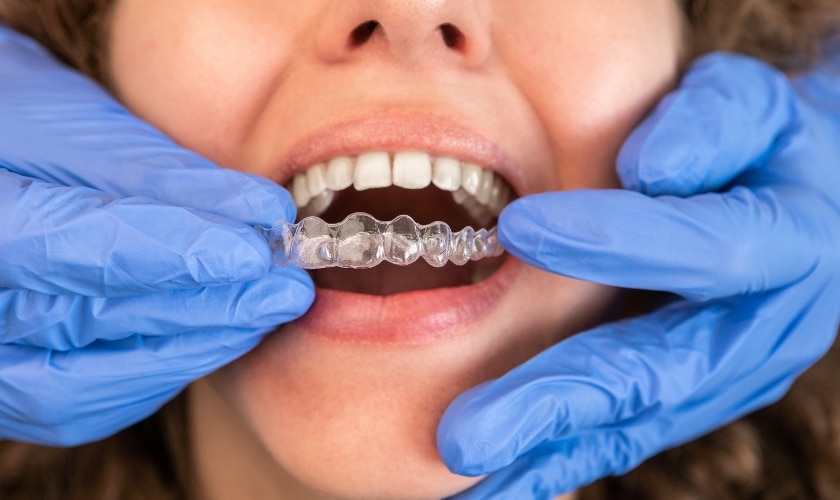
Invisalign uses a series of custom-made aligners made from clear, BPA-free plastic. These aligners gradually shift and straighten the teeth.
Benefits of Invisalign compared to traditional braces:
The removable nature of Invisalign aligners allows for simple eating, cleaning, and flossing. They are also nearly undetectable, making them a more appealing alternative. Additionally, Invisalign tends to be more comfortable than traditional braces, as there are no wires or brackets to irritate.
Treatment process with Invisalign:
A dentist or orthodontist will create a personalized treatment plan based on your dental needs. They will take digital impressions of your teeth and use advanced 3D imaging technology to map out the movement of your teeth during each stage of the treatment.
Aligner progression:
You will receive a series of aligners that must be worn for about 20-22 hours daily, only removing them for eating and oral hygiene. Before moving on to the next set of aligners, each pair is normally worn for one to two weeks.
Regular check-ups:
Throughout the treatment process, you will have periodic check-ups with your dentist or orthodontist to monitor progress and make any necessary adjustments to ensure your teeth are moving in the desired direction.
Treatment duration:
The duration of your treatment may fluctuate, contingent upon the intricacy of your case. Achieving your desired results could span a time frame ranging from six months to two years.
By understanding how it works and its unique advantages, you can make an informed decision about whether it is the right teeth straightening method for you.
Invisalign’s Effectiveness
Factors that determine if Invisalign can fix specific teeth:
Invisalign treatment effectiveness depends on the severity of misalignment, with mild to moderate cases generally responding well to the treatment.
Bite issues and alignment problems:
Invisalign is a treatment that addresses bite issues like overbite, underbite, and crossbite, enhancing the function and aesthetics of your smile.
Complex cases requiring additional treatment:
Complex dental conditions may necessitate additional orthodontic techniques in conjunction with Invisalign, which your dentist or orthodontist will evaluate and recommend the most suitable treatment.
Success rates and limitations of Invisalign:
Invisalign has a high success rate for treating many dental issues. However, there are some limitations to consider. For instance, severe crowding or misalignment may be better addressed with alternative treatments such as traditional braces or orthodontic surgery.
Aligner compliance and patient responsibility:
The effectiveness of Invisalign treatment heavily relies on patient compliance. It is essential to wear the aligners for the recommended time each day and follow the instructions provided by your dentist or orthodontist.
Managing expectations:
Although Invisalign can deliver impressive results, it’s crucial to maintain realistic expectations. Your dentist will elucidate the potential outcomes according to your specific case, which might necessitate certain compromises, especially when dealing with complex dental issues.
Understanding Invisalign’s effectiveness and limitations is crucial for making an informed decision about its treatment, and consulting a dental professional is essential for specific needs.
Types Of Teeth Misalignment Invisalign Can Fix:
Overcrowding:
Invisalign can effectively treat overcrowded teeth by gradually shifting them into proper alignment. The aligners create space and allow the teeth to straighten naturally.
Gaps between teeth:
Invisalign is also suitable for closing gaps between teeth. The aligners apply gentle pressure to move the teeth closer together, resulting in a more uniform and aesthetically pleasing smile.
Crossbite, overbite, underbite:
Invisalign can correct bite issues, including crossbite, overbite, and underbite. Guiding the teeth into the correct position helps improve the overall function and alignment of the bite.
Mild to moderate cases of misalignment:
Invisalign treats mild to moderate misalignment by straightening crooked teeth and improving smile alignment. However, effectiveness varies based on severity, so consulting a dental professional is recommended.
Cases Where Invisalign May Not Be Suitable:
Complex dental conditions:
Invisalign may not be suitable for severe crowding or misalignment cases that require more extensive orthodontic treatment. In such situations, traditional braces or other orthodontic options may be recommended.
Significant tooth movement:
Invisalign is best suited for cases that involve mild to moderate tooth movement. If your teeth require significant movement or rotation, alternative treatments may be more appropriate.
Limited compliance:
Invisalign treatment requires strict adherence to wearing the aligners for the recommended duration each day. If a patient cannot commit to the necessary wear time, it may not be the most effective treatment option.
Skeletal discrepancies:
In some cases, misalignment may be caused by underlying skeletal issues. Invisalign primarily focuses on addressing dental alignment rather than skeletal changes. In such situations, a consultation with an orthodontist or oral surgeon may be necessary to explore alternative treatment options.
It’s important to consult with a dental professional to determine if Invisalign is suitable for your specific case. They will evaluate your dental condition and recommend the most appropriate treatment approach to help you achieve optimal results.
Consultation And Treatment Planning:
The significance of a comprehensive dental examination and consultation:
Schedule a consultation with a specialized dentist or orthodontist to assess your needs and determine if Invisalign is the right treatment option.
Evaluation of dental condition:
A dentist or orthodontist assesses your dental condition, including alignment, bite, and existing issues, using X-rays, photos, and digital impressions for detailed analysis.
Discussion of treatment goals and expectations:
The dental professional will facilitate open discussions about treatment goals and desired outcomes, ensuring a personalized plan tailored to your specific needs.
Customized treatment plan:
The dentist or orthodontist will develop a personalized treatment plan outlining the duration, number of aligners needed, and any necessary preparatory steps or additional treatments.
Invisalign simulation:
Advanced software allows dental professionals to create computer-generated simulations of teeth shifting during treatment, aiding visualization and clarity in the treatment plan.
Consent and financial arrangements:
After confirming the treatment plan, you must consent to the procedure, and the dental team will discuss financial arrangements and insurance coverage for Invisalign treatment.
Delivery of aligners and instructions:
After completing the treatment plan, you’ll receive custom-made Invisalign aligners, detailed instructions on wearing and care, and a change schedule.
Periodic check-ups:
Regular check-ups with dentists or orthodontists in Alexandria, VA are essential. These appointments help monitor treatment progress, make necessary adjustments, and ensure that the treatment is proceeding as planned. Through consultation and treatment planning, a personalized Invisalign journey is established.
By working closely with a dental professional, you can ensure that your treatment goals are understood and a comprehensive plan is developed to achieve the desired results.
Invisalign in Alexandria, VA is a popular teeth straightening method, offering discreet and convenient solutions for common dental issues like overcrowding and gaps. However, its effectiveness depends on the severity of the case. Consultation with a dental professional is crucial for a customized treatment plan, aiming for a straighter, healthier smile.